Leather Jacket Care: How to Clean, Condition and Store Your Jacket
21Nov
A good leather jacket is an investment. With the right care, it can last for many years and develop a rich character. Without proper care, even high-quality leather can dry out, fade, or lose its shape.
Leather jacket care is not complicated, but it needs a different approach from caring for ordinary fabric. Leather is a natural material, and it responds to moisture, heat, sunlight, and cleaning products in ways that fabric does not.
In this guide, we explain how to clean, condition, and store your leather jacket properly, along with the common mistakes to avoid.
Why Leather Jacket Care Matters
Leather contains natural oils that keep it flexible and strong. Over time these oils dry out, especially with exposure to sun, heat, or harsh conditions, and dry leather can become stiff, crack, or lose its colour.
Regular care preserves these oils and protects the surface. Cleaning removes dirt and sweat that damage leather over time, conditioning restores moisture and flexibility, and proper storage prevents creasing, stretching, and mould.
Know Your Leather Type Before You Start
Different leathers need different care, so know your leather type before you start.
Smooth Leather
Smooth leather has a clean, even surface. It is easy to clean and condition, but it shows scratches and marks more easily than textured leather.
Suede and Nubuck
Suede and nubuck have a soft, velvety surface and are sensitive to water and stains. Use a suede brush and a cleaner made specifically for suede, not products meant for smooth leather.
Distressed Leather
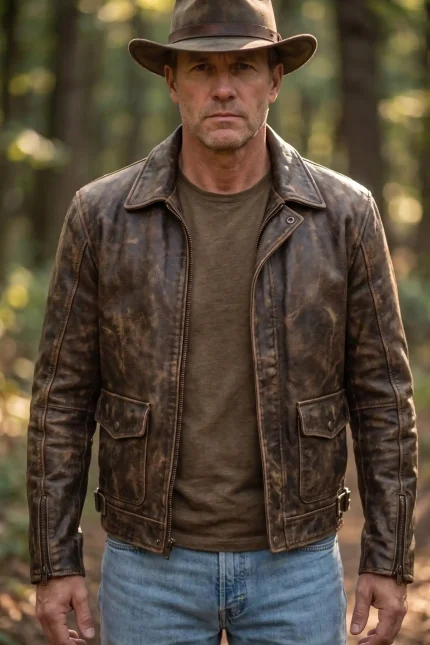
Distressed leather has a worn-in finish and is generally durable, but harsh cleaning can affect its colour and texture. Use gentle products and avoid over-conditioning.
Shearling and Lined Jackets
Shearling and fleece-lined jackets need extra care. Keep the lining clean and dry, and treat the leather separately where possible.
If you are unsure, check the care label or ask the retailer. The wrong product can do more damage than doing nothing.
How to Clean a Leather Jacket
Step 1: Remove Surface Dust
Wipe the jacket with a soft, dry cloth to remove dust and light dirt. Work gently, especially around the collar, cuffs, and pockets, where dirt builds up.
Step 2: Spot Clean Small Marks
For small marks, wipe gently with a slightly damp cloth. Do not scrub hard, as this can spread the mark or damage the finish. If the mark does not come off, stop and consider a leather cleaner.
Step 3: Use a Leather Cleaner
For a deeper clean, use a leather cleaner made for your leather type. Apply a small amount to a soft cloth, not directly to the jacket, and wipe in small, gentle circles without soaking the leather.
Always test the cleaner first on a hidden area, such as inside a pocket, to check it does not change the colour or texture.
Step 4: Let It Dry Naturally
After cleaning, let the jacket dry naturally at room temperature. Never use a hairdryer, radiator, or direct sunlight to speed up drying, as heat can stiffen and crack leather.
What Not to Do When Cleaning
Never machine wash a leather jacket unless the care label specifically allows it. Water, heat, and detergent can cause serious damage.
Avoid household cleaners, bleach, and abrasive sponges, which strip the natural oils from the leather and damage the finish.
How to Condition a Leather Jacket
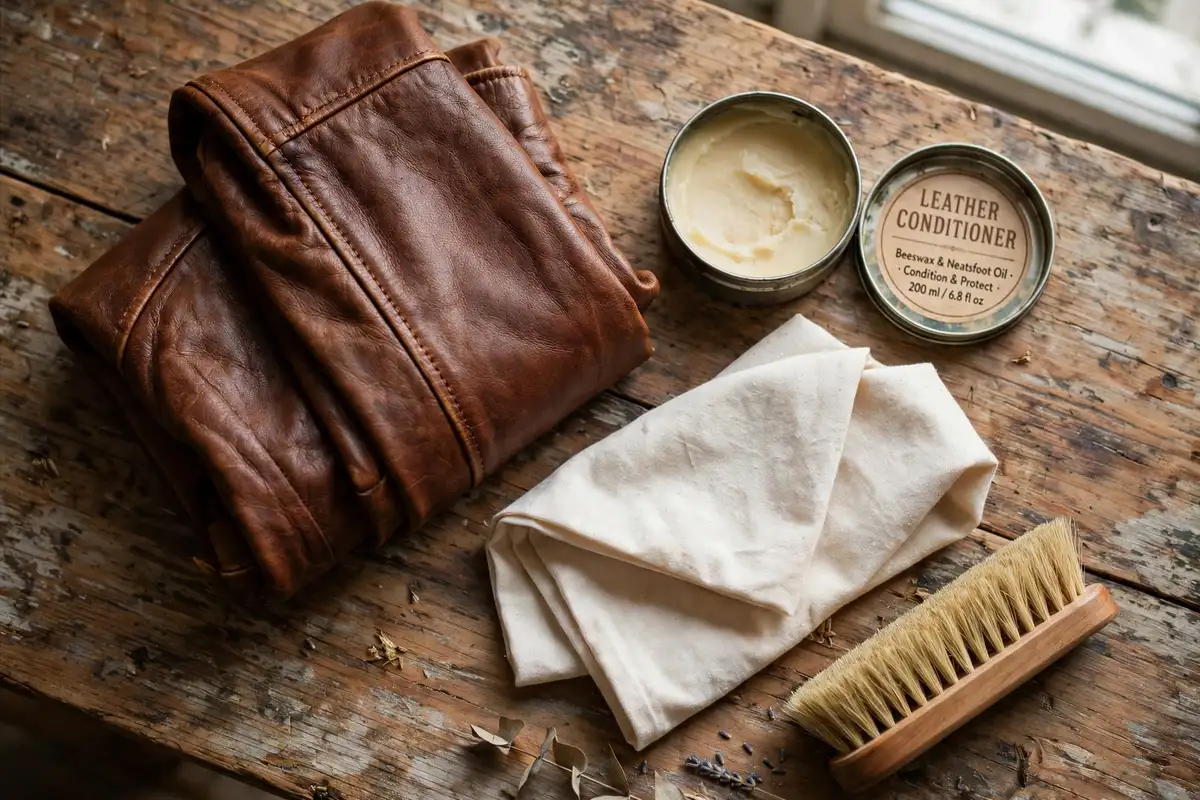
Conditioning is one of the most important parts of leather jacket care. It keeps the leather soft, flexible, and resistant to cracking.
When Should You Condition?
For most jackets, conditioning every few months is enough, or sooner if the leather feels dry or stiff. Frequent wear or a dry climate may mean conditioning more often.
How to Apply Conditioner
Choose a conditioner made for your leather type, and test it on a hidden area first, as some conditioners darken leather slightly, especially lighter colours. Apply a small amount to a soft cloth and rub it in using thin, even layers, working in sections and avoiding too much product at once.
Let it absorb for the time recommended in the product instructions, then wipe away any excess with a clean cloth. The leather should feel supple, not sticky or greasy.
How to Protect Your Jacket from Water and Stains
Leather is not fully waterproof, and water can leave marks or cause stiffness if handled incorrectly.
If your jacket gets caught in light rain, wipe it gently with a soft cloth and let it dry naturally, never with heat.
For extra protection, use a leather protector spray suitable for your leather type, applied evenly and left to dry completely before wearing. It repels light moisture and reduces staining, but will not make the jacket fully waterproof.
Avoid wearing your jacket in heavy rain if possible. If it gets soaked, do not wring it out or fold it while wet. Hang it on a wide hanger and let it dry slowly at room temperature.
How to Store a Leather Jacket
Proper storage is just as important as cleaning and conditioning.
Use the Right Hanger
Use a wide, sturdy hanger that supports the shoulders, ideally padded or wooden. A thin wire hanger can stretch the shoulders or leave dents.
Avoid Folding for Long Periods
Folding a jacket for a long time can cause creases that are difficult to remove. For travel, fold it loosely and unpack it as soon as possible.
Keep It in a Cool, Dry Place
Store it in a cool, dry place with good airflow. Damp areas can cause mould and mildew, and direct sunlight fades the colour over time.
Use a Breathable Cover
If you use a garment cover, choose a breathable fabric one rather than plastic, which traps moisture. Also give the jacket space in the wardrobe, as squeezing it between other clothes can crease it or distort its shape.
Dealing with Common Leather Jacket Problems
Creases and Wrinkles
Small creases are normal, especially around the elbows and waist, and hanging the jacket properly to rest can reduce them. Never iron leather directly, as heat damages it.
Scuffs and Scratches
Light scuffs often improve with gentle rubbing from a soft cloth or a little conditioner. For deeper scratches, seek advice from a leather care specialist.
Unpleasant Smells
Leather absorbs smells from smoke, food, or storage, so air the jacket in a well-ventilated area. Never spray perfume or strong chemicals directly onto it, as they can affect the finish.
Mould or Mildew
Wipe mould away gently with a soft, dry cloth and let the jacket air out. Do not use bleach or harsh chemicals. If it persists, consult a professional leather cleaner.
Choosing the Right Products
Choose products made specifically for leather, avoiding harsh solvents or unknown chemicals, and follow the recommended amount, because too much product can leave a residue or change the leather's appearance.
You can browse our leather jackets collection to see the different leather styles and finishes we offer, and to find a jacket that suits your needs.
For style inspiration, you may also want to read our cafe racer leather jacket guide and our bomber leather jacket guide.
Frequently Asked Questions
1. How often should I clean my leather jacket?
Wipe away surface dirt regularly, and clean more thoroughly when it is visibly dirty or after exposure to rain, sweat, or strong smells. A deeper clean a few times a year is enough for most people.
2. Can I wash a leather jacket in a washing machine?
In most cases, no. Machine washing can damage leather, make it stiff, and affect its colour and shape. Follow the care label, and if in doubt, use a leather cleaner or consult a professional.
3. How often should I condition my leather jacket?
Every few months is usually enough, or sooner if the leather feels dry, stiff, or looks dull. Avoid over-conditioning, as too much product leaves a residue.
4. What is the best way to store a leather jacket?
Store it on a wide, sturdy hanger in a cool, dry place with good airflow. Use a breathable cover if needed, and avoid long folding, plastic storage, sunlight, and heat.
Conclusion
Leather jacket care is about consistency rather than complicated treatments. Regular cleaning, occasional conditioning, and proper storage will keep your jacket looking good and feeling comfortable for years.
Understand your leather type, use the right products, and avoid mistakes such as machine washing or harsh chemicals. With a little care, your jacket will keep developing character and remain a reliable part of your wardrobe.
More Leather Jacket Guides
Explore our other guides: How to Style a Black Leather Jacket, Biker Leather Jacket Guide, Aviator Leather Jacket Guide and Bomber Leather Jacket Guide.